How I survived the last week, in 3 bullet points:
- REO Speedwagon. Specifically, the inspiration gained from Kevin Cronin’s perm.
- Devastating Greek sculpture. Specifically, Laocoon and His Sons. Brutal.
- Chocolate. No specifics, all of it.
First off, I literally have nothing to complain about. I work in a chocolate shop, for heaven’s sake. I make bonbons and nosh on reject caramels all day.
But sometimes…the mind wanders. It daydreams. Sometimes, I think about Kevin Cronin belting out that he’ll keep on lovin’ me, and I believe that beautiful icon. And wonder when our love child, Weird Al, last bothered to call his gracefully-aged father.
Or sometimes, I think about Laocoon and sons struggling with Nagini, and feel connected to the greeks in a way that I never have before. They understood agony. That’s the same wrestle I go through every time I remember the band camp tees and that sparkly retainer I used to wear everyday in high school, which will never be long enough ago. #ThnksFrThMmrs
But also, it dreams about the trusty, ramen noodle-crusted keyboard on which I am currently typing. Of my cyber home, Zest. Of the recipes to be written. The blogging to blog.
So here we are.
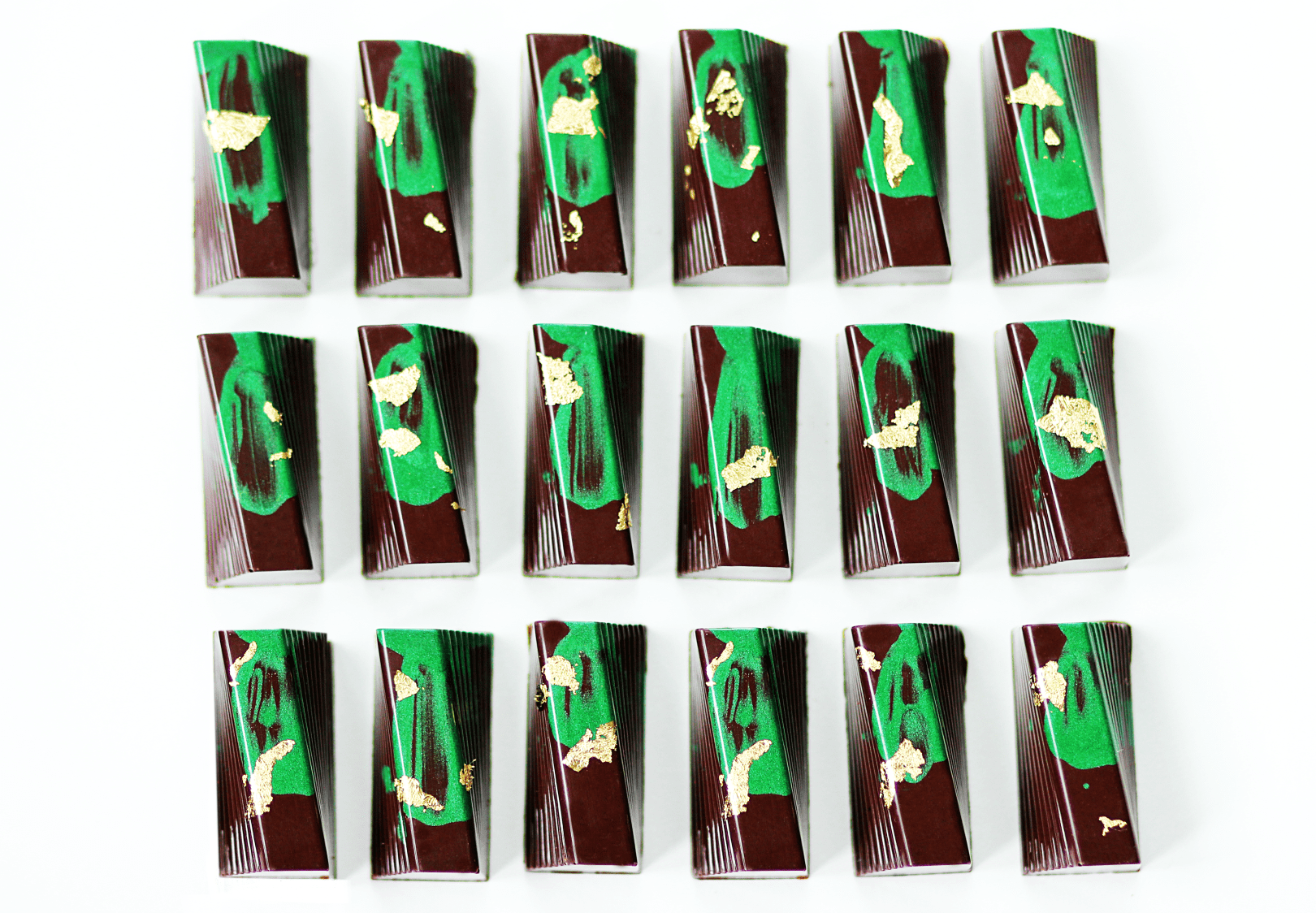
On the menu, we’ve got some pistachio caramel bonbons. Essentially a molded candy with a caramel filling. Not quite as easy as whipping out a batch of chocolate chip cookies, but definitely a conquerable goal.

So let’s break this down.
This type of candy requires a few special ingredients and equipment.
- Chocolate Couverture for the outer shell
- Colored Cocoa Butter for decorating (if desired)
- Polycarbonate Chocolate Molds (Chef Rubber, Bake Deco, and JB Prince are good sources)
The last two are pretty self-explanatory, but let’s get into the chocolate.
What’s the difference between regular chocolate from the grocery store and chocolate couverture?
Chocolate couverture is a higher quality chocolate that contains a higher percentage of cocoa butter. This allows for a higher sheen and snappier snap when the chocolate has been tempered correctly. Popular brands used in the industry include Valrhona, Guittard, and Cacao Barry.
Nice. So what does “tempering” chocolate mean?
In short, a process of heating/cooling/then-heating-again that allows the feisty fatty acids in cocoa butter to form a stable crystalline structure. This stable structure of tightly bound crystals gives a shiny appearance and is more resistant to heat and touch. A chocolate that is not tempered correctly contains unbound crystals that appear streaky, crumbly, and discolored. Picture that ancient, chalky Christmas candy in the back of your pantry – those unpleasant blotchy spots across the chocolate’s surface are called “bloom” – a term used when those chocolate crystals get out of line.
Heating/cooling/then-heating-again?
Right, so each chocolate has a specific tempering curve particular to that specific cocoa percentage and brand. So a dark chocolate (like the 64% we are using in our pistachio bonbon) will require a slightly higher temperature curve then a milk chocolate (say a 38% cocoa content) or a white chocolate (that contains no cocoa, but rather a mix of dairy solids, sugar, and cocoa butter).
Example curves (that remember, can vary from brand to brand):
Dark Chocolate: Melt to 120F. Cool to 82F. Reheat to 88F
Milk Chocolate: Melt to 115F. Cool to 80F. Reheat to 86F.
White Chocolate: Melt to 110F. Cool to 78F. Reheat to 82F.
In a future post I’ll get more into home-tempering methods, but for now – this youtube tutorial:
*Bonus, this video contains the jazziest of tunes.
Now, the recipe.
Pistachio Caramel Bonbons
Makes 21 bonbons (with some filling leftover, depending on the size of your mold)
Decoration
Green Cocoa Butter, I used ‘Green Crystal’ cocoa butter from Chef Rubber
Edible Gold Leaf, I used Manetti brand
Outer Shell
Cacao Barry Extra Bitter Guayaquil 64%, I bought from L’Epicerie, but can be found in a variety of places online.
For the pistachio caramel ganache:
3 tablespoons water
1 tablespoon corn syrup
2/3 cup sugar
1 cup cream, heated to near boiling
1/4 cup pistachio paste
1/3 cup dark chocolate (basic chocolate chips will work here)
1/3 teaspoon salt
FIRST
Decorate your mold. Cocoa butter must be brought up to, and kept at, a temperature between 84-86 degrees Fahrenheit while decorating. (I use this infrared thermometer to make measuring temp easier) (Also, you can laster-temp your entire house and room mates. It’s great). You can apply the butter any way that strikes your fancy – for mine I did a quick finger swipe across the bottom of each cavity. Like finger painting. Super quick. You could also use a small paintbrush to get a similar effect, and cleaner hands, if that’s more your thing.
I applied the gold leaf after un-molding the finished bonbons. I use a small make-up bruss (new and make-up free) to gently place small pieces of old leaf where desired. Edible gold leaf is incredibly thin and fragile, so warning: no ceiling fans, no open windows, no fast movements. Just…don’t even breath. One enthusiastic exhale and you’ve just blown, like, $15 on the floor.
SECOND:
You create the outer shell of your bonbon using tempered chocolate. Some day in the future I may do a tutorial, but for now, let’s watch the incredibly smooth Jacque Torres do this entire thing in less than a couple minutes, without getting a single drop of chocolate on his hands.
*Also, the cutest pronunciation of “bonbon” I have ever heard.
THIRD:
Filling time!
1) Heat the cream (in the microwave is just fine) until just boiling. Set aside.
2) In a medium-large saucepan (the caramel will foam up when you add the cream later in the recipe, so use a pan with enough height for the caramel to rise during cooking), add the corn syrup, water, and sugar. Over low heat, stir ingredients with a spatula until homogenous (being careful not to get sugar crystals up the side of the pan). Stop stirring, and let the mixture melt entirely into a clear syrup. Bump up the heat to medium, and continue to cook until the syrup reaches a medium-gold color, swirling the pan occasionally.
*Important to note: this caramel contains corn syrup, a product developed with many uses, one of which is preventing sugar crystallization. In wet caramel recipes (recipes that use both water and sugar to create a syrup, as opposed to dry caramel that melts straight granulated sugar without water), it is incredibly easy to over-agitate the mixture, causing the sugars to recrystallize into an unfortunate, impossible mess. The addition of corn syrup in this recipe means you don’t have to worry as much about stirring or swirling the sugar too much during cooking. As someone who has felt the pangs of crystallized-sugar despair, this means EVERYTHING. Ok.
3) Remove golden sugar syrup from heat. Carefully add cream – the mixture will boil up and then settle again. Return the pan to medium heat, and whisk continually for about 3 minutes. Remove from heat.
4) Immediately add unmelted dark chocolate, pistachio paste, and salt. Whisk until smooth. Pour mixture into a pastry bag and let cool to about 75-78F. A good test: place the bag against your wrist – if you can just barely feel some warmth you’re good to go.
PIPE filling into each cavity, leaving about 1/8 inch headspace to cap the bonbon. Let rest an hour or two to set before capping.
FOURTH:
Cap ’em!
Similar to the video below, ladle chocolate on top of each filled cavity, then use a spatula or bench scraper to scrape excess chocolate off the mold. Let set before un-molding.
FIFTH:
Un-mold. Check the bottom of the mold – you’re looking to see that the chocolate has contracted away from the mold, and that there are no places where it appears the chocolate is still stuck (those areas will appear as darker patches). If you have some candies that haven’t completely contracted, place the mold in the fridge for 20-30 minutes. Releasing too soon could leave little release marks on the tops of your bonbons.
Lightly twist the mold to release chocolates (similar to how you would twist an ice cube tray to loosen ice cubes). Then invert and lightly tap mold on counter to release the bonbons. Done! Store in a cool, dry place for up to 2 months.

 Dough Puncher